
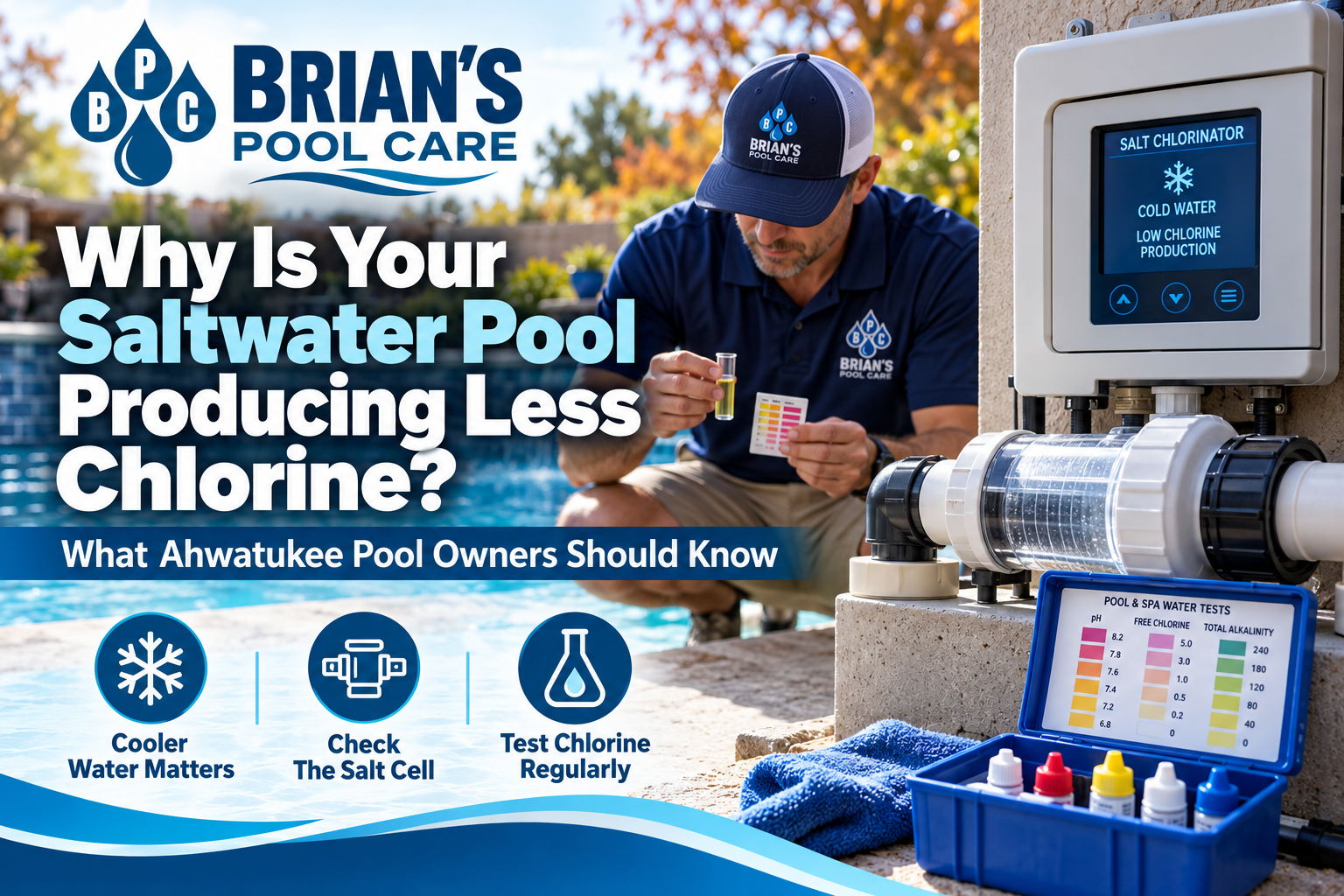
Why Is Your Saltwater Pool Producing Less Chlorine As Temperatures Fall?
Your Ahwatukee swimming pool has been running beautifully all summer. The water looks clear, the salt system has been doing its job, and you’ve barely thought about how the chlorine gets into the pool.
Then November arrives. You check the water and discover the chlorine level isn’t where it should be. Perhaps the salt system is displaying an unfamiliar warning, even though everything seemed fine a few weeks ago.
Before assuming something expensive has broken, it’s worth understanding how cooler temperatures affect saltwater pools.
How Cooler Water Affects Salt Chlorine Generators
A saltwater pool doesn’t actually operate without chlorine. Its salt chlorine generator converts dissolved salt into chlorine using an electrical process.
Some generators automatically reduce or stop chlorine production when the water becomes too cold.
For example, Pentair’s IntelliChlor systems stop producing chlorine at approximately 52 degrees Fahrenheit, with a small temperature tolerance.
Other manufacturers and models have different operating limits.
In Ahwatukee, autumn temperatures don’t necessarily reach that point immediately. However, as nights become cooler, it’s sensible to understand the limitations of your particular equipment.
Why A Warning Light Doesn’t Always Mean Trouble
Imagine checking your salt system one morning and finding a warning about low temperature.
It’s tempting to assume the generator has failed, particularly if you’ve never noticed the message before.
However, some warning indicators simply explain that the equipment has temporarily suspended chlorine production.
Check your manufacturer’s instructions before deciding something needs replacing.
A warning about insufficient water flow or low salt is a different matter and requires separate investigation.
If several warning lights appear together, or the display doesn’t match what the pool is actually doing, professional testing may be worthwhile.
Your Pool Still Needs Sanitizer
Here’s something important. Cooler water doesn’t mean your swimming pool can operate without proper sanitation.
Although chlorine demand may decrease during winter, leaves, dust, organic material and other contaminants can still enter the water.
The Centers for Disease Control and Prevention recommends maintaining appropriate free chlorine and pH levels in residential pools.
Regular testing remains necessary even when nobody has been swimming for several weeks.
If your salt generator has stopped producing chlorine because of cold water, your pool may need an alternative method of chlorination.
A pool professional can recommend the correct approach based on your existing water chemistry and equipment.
Don’t Add Salt Without Testing First
A low chlorine reading doesn’t automatically mean your swimming pool needs more salt.
This is an easy mistake to make.
If the generator has suspended operation because of temperature, adding salt won’t necessarily make it start producing chlorine again.
A faulty sensor, restricted circulation or calcium buildup may also affect the system.
Before adding anything, establish the actual salt concentration using an appropriate test.
Too much salt can create problems of its own, so avoid guessing how many bags the pool needs.
The correct concentration depends on the manufacturer’s specifications.
Check The Pool’s Circulation System
Your salt generator generally needs sufficient water moving through the system to produce chlorine.
A clogged filter, restricted skimmer or pump problem can interfere with that process.
Check whether the pump is operating normally and whether the filter pressure has changed.
If the generator displays a flow warning, don’t immediately assume the salt cell itself is defective.
Similarly, changing the pump schedule for winter can affect how long the generator has an opportunity to operate.
The aim is to maintain proper circulation and sanitation while avoiding unnecessary equipment operation.
Have Your Salt System Checked By Brian’s Pool Care
If your Ahwatukee saltwater pool has developed low chlorine readings, confusing warning lights or suspected salt cell problems, Brian’s Pool Care can help. Our locally owned team provides water chemistry testing, salt cell cleaning, weekly pool maintenance and equipment repairs exclusively in Ahwatukee. Rather than guessing at the problem or adding unnecessary chemicals, call 480-907-7959 to arrange an inspection and request a free estimate for keeping your pool properly maintained throughout the cooler months.
Live References
https://www.brianspoolcare.com/
https://www.brianspoolcare.com/ahwatukee-pool-repair.htm
https://www.brianspoolcare.com/do-you-need-to-winterize-a-pool-in-ahwatukee-az/
https://www.cdc.gov/healthy-swimming/about/home-pool-and-hot-tub-water-treatment-and-testing.html